
"Valve's MOBA Shooter Deadlock Unveils Ultra-Exclusive Build" Valve has officially revealed its highly anticipated multiplayer action game, Deadlock, a unique fusion of MOBA (Multiplayer Online Battle Arena) and tactical shooter mechanics. The announcement was made during a special live stream event, where the studio showcased the game’s first ultra-exclusive build — a limited-time version of the game available only to select players and streamers. Deadlock takes place in a high-octane, sci-fi dystopia where teams of four battle across destructible maps filled with shifting terrain, energy-based weapons, and character abilities that evolve mid-match. Unlike traditional MOBAs, Deadlock emphasizes real-time combat, environmental interaction, and precise positioning, blending the strategic depth of MOBA gameplay with the fast-paced gunplay of a tactical shooter. The ultra-exclusive build features: Five Unique Heroes, each with distinct roles (Duelist, Controller, Defender, Striker, and Support), designed to synergize in team compositions. Dynamic Objective Zones that change throughout matches — including a core "Influx Core" that pulses with energy, altering map hazards and granting power-ups. Real-Time Ability Synergies, allowing players to chain abilities across different characters for devastating combos. Advanced Environmental Destruction, where players can collapse walls, trigger chain reactions, and manipulate gravity fields to gain tactical advantage. First Look at the “Deadlock Nexus” — a deep progression system that unlocks new skins, voice lines, and cosmetic variants based on in-game performance. According to Valve’s lead developer, "Deadlock isn’t just a game — it’s a new genre. We wanted to break the mold of what a MOBA can be, merging the precision of shooters with the strategy of MOBAs. The ultra-exclusive build is our way of testing the waters with the community and refining the experience before full launch." The build will be available to a small, curated group of players through a beta registration program, with full access expected later in 2024. Valve has also confirmed that Deadlock will be free-to-play at launch, with cosmetic-only in-game purchases and a robust battle pass system. Fans are already buzzing online, with early gameplay footage showing explosive team fights, intricate map mechanics, and one player executing a 7-second, 4-kill combo using a perfectly timed ability chain. Stay tuned for more details on the official launch, server performance, and community events as Deadlock prepares to redefine the future of competitive multiplayer gaming.
This leak from a top Deadlock player’s livestream has sent shockwaves through the game’s growing community—fueled not just by the sudden glimpse of unreleased content, but by the revelation of another, even more restricted playtest build. What began as a simple error—accidentally launching a wrong build during a stream—has quickly become a full-blown digital wildfire, with fans dissecting every frame for clues about the game’s evolving direction.
The roster displayed includes several returning and long-anticipated characters:
- Doorman, the iconic, stone-faced enforcer with a history in Valve’s darker, more surreal corners (especially in Left 4 Dead’s lore and fan theories), now reimagined in Deadlock’s gritty, stylized world.
- Bookworm, a new, scholarly figure with glasses and an aura of quiet menace—possibly a support or control hero, given the lore hints of arcane knowledge and mental manipulation.
- Vampirebat, a gothic, bat-winged assassin with a flair for shadows and speed, hinting at a more supernatural or horror-tinged aesthetic than previously suggested.
Meanwhile, Ivy, one of the original playable heroes, received a striking visual overhaul—her plant-based powers now appear more organic and bioluminescent, with vines that pulse like living circuitry. This suggests a deeper thematic shift toward a surreal, cyber-organic fusion, possibly blending nature with dystopian technology.
What’s especially notable is that this isn’t just a cosmetic update—it’s a fundamental rework. The removal of an entire lane, already rumored in earlier builds, now appears confirmed, signaling a radical departure from traditional MOBA structure. With no mid-lane, Deadlock may be moving toward a more fluid, objective-focused meta—more akin to a hybrid shooter-MOBA, similar to Team Fortress 2 meets Apex Legends with a dash of Dota 2’s chaos.
The irony is not lost on fans: Valve, historically tight-lipped about new projects, has now become the epicenter of a leak-fueled lore frenzy. Deadlock has long operated under a veil of secrecy, but this latest incident highlights a growing tension between exclusivity and community expectations. Fans who’ve waited months for an invite now feel betrayed—not just by the leak, but by the sheer number of hidden builds. As one Reddit user wryly noted: “Oh great, as if one Lash wasn’t bad enough, now there are two of him!” — a jab at the recurring confusion surrounding duplicate hero builds in past leaks.
This double-layered testing structure—invite-only for most, but another ultra-exclusive channel running parallel—suggests Valve may be using a tiered feedback system: one for general player testing, and another for deep, internal validation of mechanics, art, and balance. It’s not unprecedented—Valve used similar pipelines for Dota 2 and Counter-Strike, but Deadlock’s experimental nature and ambiguous genre classification make the secrecy even more intense.
Still, the leak isn’t all bad. For fans, it’s a rare window into the game’s soul—its tone, its mechanics, its ambition. And despite the chaos, it’s proof that Deadlock is more than just a rumor: it’s evolving, and it’s alive.
For now, Valve remains silent. No statement. No apology. No confirmation. But the world is watching.
And if this is how the game leaks, one can only wonder: What’s next in the shadows?
-
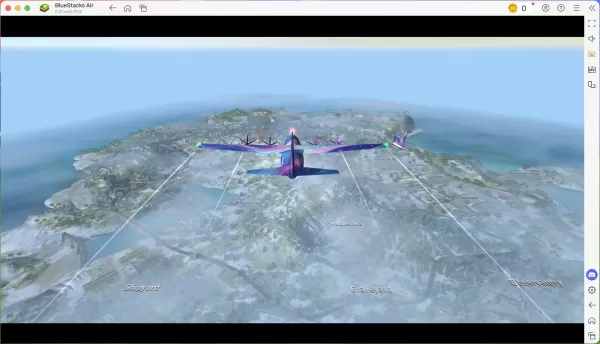 Free Fire s'est imposé comme l'un des jeux battle royale les plus populaires pour mobile, surpassant Call of Duty: Mobile et rivalisant avec PUBG Mobile. Pour devenir le dernier survivant de chaque partie, les joueurs doivent maîtriser en profondeurAuteur : Peyton May 12,2026
 -
Lorsque le jeu de survie médiéval zombie God Save Birmingham a fait ses débuts en avril, sa bande-annonce « gameplay » de 8 minutes a déclenché une tempête de réactions — mêlant enthousiasme et scepticisme profond. Les blagues sur son cadre birminghaAuteur : Riley May 12,2026













![A Father’s Sins – Going to Hell [Ch. 7 Public] By Pixieblink](https://img.laxz.net/uploads/67/1719578270667eae9eb6a75.jpg)




- Spring Valley Farm Game: janvier 2025 Codes de rachat
- Pokémon présente 2025 dévoile des révélations passionnantes
- Mobile Legends: Bang Bang – Meilleure construction de Lukas
- "Économisez 20% sur les jeux PC Top 2025"
- "Grand Outlaws lance le chaos et le crime sur le lancement d'Android Soft"
- Pokémon Sleep célèbre la Saint-Valentin avec l'éclair, le cheesecake et plus de desserts!
-
1Maîtriser votre temps: les meilleures applications de productivité
-
2Meilleurs jeux décontractés pour la détente
-
3Applications Autres Populaires pour les Utilisateurs Android
-
4Des jeux éducatifs amusants pour stimuler l'apprentissage
-
5Explorez le monde des jeux de tir
-
6Meilleurs jeux de sport pour Android